Key Benefits of Mangroves
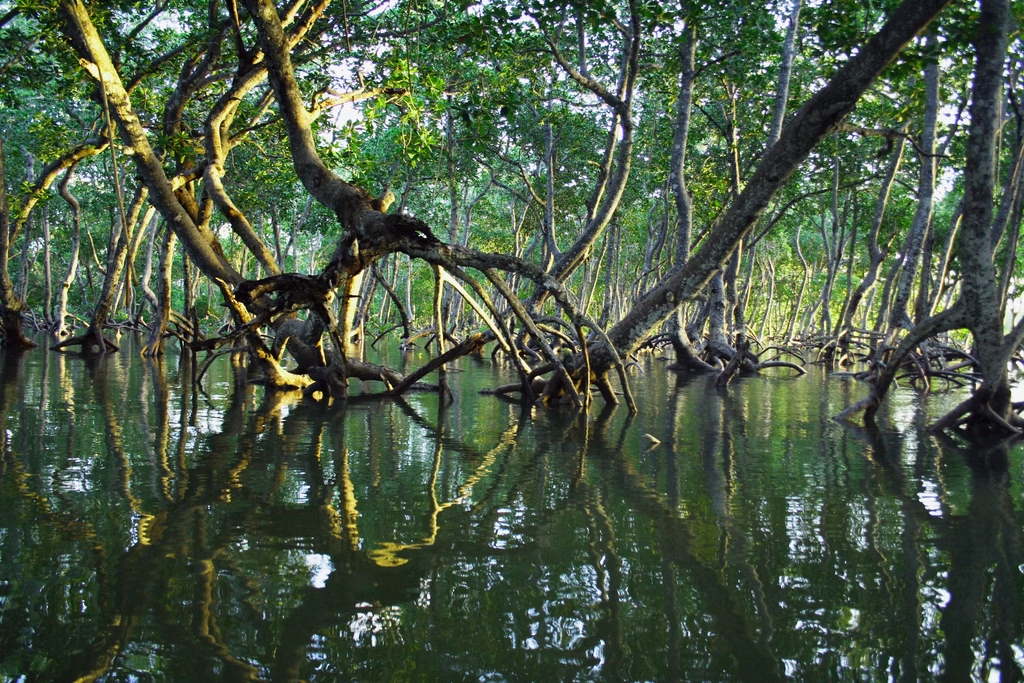
- Coastal Protection: Mangroves act as natural barriers against waves, storm surges, and strong winds. Their dense, tangled root systems absorb wave energy, reduce the impact of storms, and help prevent coastal erosion.
- Carbon Sequestration: Mangroves are highly effective carbon sinks, often referred to as blue carbon ecosystems. They capture and store large amounts of carbon in their vegetation and waterlogged, oxygen-poor soils, with carbon storage rates that can greatly exceed those of many mature tropical forests.
- Marine Nurseries: The complex network of submerged roots provides sheltered breeding, nursery, and feeding grounds for a wide variety of marine species, including juvenile fish, crabs, and crustaceans. By supporting healthy fish populations, mangroves play an important role in sustaining coastal and commercial fisheries.
- Water Filtration: Mangrove roots slow water flow and trap sediments, while the surrounding soils can retain and process pollutants such as excess nutrients and heavy metals. This helps improve water quality and protects nearby coral reefs and seagrass beds from sedimentation and pollution.
- Livelihoods and Resources: Mangroves provide essential resources and economic opportunities for millions of people in coastal communities. They support small-scale fisheries, provide food and other natural resources, and contribute to livelihoods through ecotourism and sustainably harvested materials.
Major Threats to Mangroves
- Aquaculture and Agriculture: The conversion of mangrove forests for commercial shrimp farming and large-scale oil palm plantations remains a major driver of habitat loss. Mangroves are often cleared to make way for ponds and agricultural land, resulting in the permanent loss and fragmentation of coastal ecosystems.
- Extractive Industries: Expanding nickel mining and other forms of coastal mineral extraction can cause severe localized habitat destruction. Mining activities may also introduce sediment and chemical pollutants into surrounding coastal waters, further degrading mangrove ecosystems.
- Climate Change: Rising sea levels, increasingly intense storm surges, and changes in temperature and salinity pose growing threats to mangrove forests. These changes can cause coastal erosion, reduce suitable habitat, and place additional stress on mangrove species.
- Pollution and Oil Spills: Plastic waste, agricultural runoff, industrial pollutants, and oil spills can severely damage mangrove ecosystems. Oil, in particular, can coat mangrove roots and interfere with oxygen exchange, potentially causing widespread tree mortality. Past oil-spill incidents in East Kalimantan illustrate the vulnerability of these ecosystems to industrial pollution.
- Overexploitation: Illegal logging and the excessive harvesting of mangrove wood for fuel, construction, and other local uses can reduce forest density and alter ecosystem structure. Continued overexploitation also limits the ability of mangroves to regenerate naturally.
- Governance and Infrastructure: Coastal reclamation, rapid urbanization, and poorly planned infrastructure can disrupt the natural flow of water and sediment that mangroves depend on. Weak enforcement of environmental regulations and inadequate coastal planning can further undermine both mangrove conservation and restoration efforts.